


One of the most essential factors in maintaining long-term skin health is protecting your skin from UV damage, and choosing the ideal sunscreens can make all the difference.
In this article, we explain all you need to know before choosing the best sunscreens for your specific needs. You'll learn which ingredients to prioritize, how to apply sunscreen correctly for the greatest protection, the best-rated sunscreens for each type of skin, and the most common mistakes people make while applying sunscreen.
Best Sunscreens for Different Skin Types
The composition and ingredients of the best sunscreens vary depending on the kind of skin, such as oily, dry, sensitive, or acne-prone skin:
- For acne-prone skin, oil-free and easily absorbed sunscreens with mattifying ingredients are recommended. To prevent clogging pores, lotions and zinc oxide-based solutions are favored over creams.
- Sunscreens with ceramides or humectants in cream form are beneficial to dry skin because they give extra moisture.
- Mineral sunscreens without perfumes or artificial filters that contain zinc oxide and titanium dioxide are perfect for sensitive skin.
- Oil-free, matte-finish lotions, gels, or sticks are necessary for oily skin to prevent greasiness and heaviness.
- Eczema-friendly sunscreens are typically hydrating and high in antioxidants.
How to Apply Sunscreen Correctly for Maximum Protection?
To apply sunscreen correctly for maximum safety, follow these steps:
- Apply enough sunscreen to all of your exposed skin. It is advised to use around a teaspoon for the face and one ounce for the entire body. Be sure to include frequently overlooked regions such as the hands, neck, ears, feet, and back of the knees.
- To ensure that sunscreen absorbs into the skin and becomes effective, use it 15 to 30 minutes before your sun exposure.
- To ensure that the ingredients are equally distributed, give the sunscreen a good shake before using it. Instead of just spreading it lightly, apply it thoroughly and rub it in completely for complete coverage.
- To stay protected during sun exposure, reapply sunscreen every two hours or right away after swimming, sweating, or towel drying.
- Avoid contact with the eyes and use a specific lip balm with SPF for lip protection.
By following these recommendations, sunscreen can function at its best to shield the skin from damaging UV rays and lower the chance of sunburn and skin damage.
Ingredients to Look for in the Best Sunscreens:-
The best sunscreens have essential components that offer broad-spectrum protection by blocking UVA and UVB rays, along with antioxidants that guard against skin damage.
Zinc Oxide, Titanium Dioxide, Avobenzone, and Octinoxate are all important active components to look out for.
In addition to these filters, antioxidants and calming components are beneficial, including:
- Antioxidant defense against free radicals and skin aging is provided by green tea extract, ginseng extract, vitamin C, and vitamin E.
- Aloe Vera reduces inflammation, locks in moisture after sun exposure, and has calming and hydrating properties.
These combinations of ingredients help prevent sun damage, minimize irritation, and promote skin health.
Common Mistakes When Using Sunscreen:-
When applying sunscreen, typical mistakes can lessen its efficacy, such as:
- Not spreading sunscreen spray: For uniform coverage and to prevent missed areas, sunscreen spray must be massaged into the skin.
- Putting off applying for too long: Applying sunscreen 15 to 30 minutes before heading outside will allow it to penetrate and start working.
- Not reapplying frequently enough: Sweating or swimming causes sunscreen to degrade and wash off. Reapplying it every two hours or right away is required.
- Common areas that are missing: Uneven protection results from frequently ignoring the ears, neck, hairline, back of hands, and feet.
- Ignoring SPF levels or using sunscreen that has expired: Sunscreens decrease their potency over time; SPF 30 or greater is advised for sufficient protection.
Best Sunscreens for Sensitive and Acne-Prone Skin:-
|
Feature |
||
|
Key Features |
broad-spectrum protection (UVA, UVB, IR, blue light), and offers hydration, skin-barrier support, antioxidant protection, and elasticity. |
Broad-spectrum protection against UVA, UVB, IR, and blue light offers antioxidant protection and skin health. |
|
Texture & Finish |
Lightweight fluid cream with a non-greasy, non-shiny formula with matte/non-sticky finish. |
Spray-lotion texture with a lightweight texture that absorbs easily, offering a non-shiny finish. |
|
Skin Type |
Oily, sensitive, acne-prone skin, or combination skin. |
Oily, acne-prone, and sensitive skin. |
Conclusion
One of the most important things you can do to preserve long-term skin health and avoid premature aging is to find the best sunscreens for your skin type.
Selecting the appropriate product is important, but so is proper application. Your skin will remain well-protected throughout the day if you apply enough sunscreen, apply it early, and reapply it every two hours.
The best brand of sunscreen for face is Bioblas, as it offers Bioblas Suncare Aqua Fusion Fluid Cream and Bioblas Suncare Aqua Fusion Lotion Spray, which are two excellent options for oily, sensitive, and acne-prone skin.
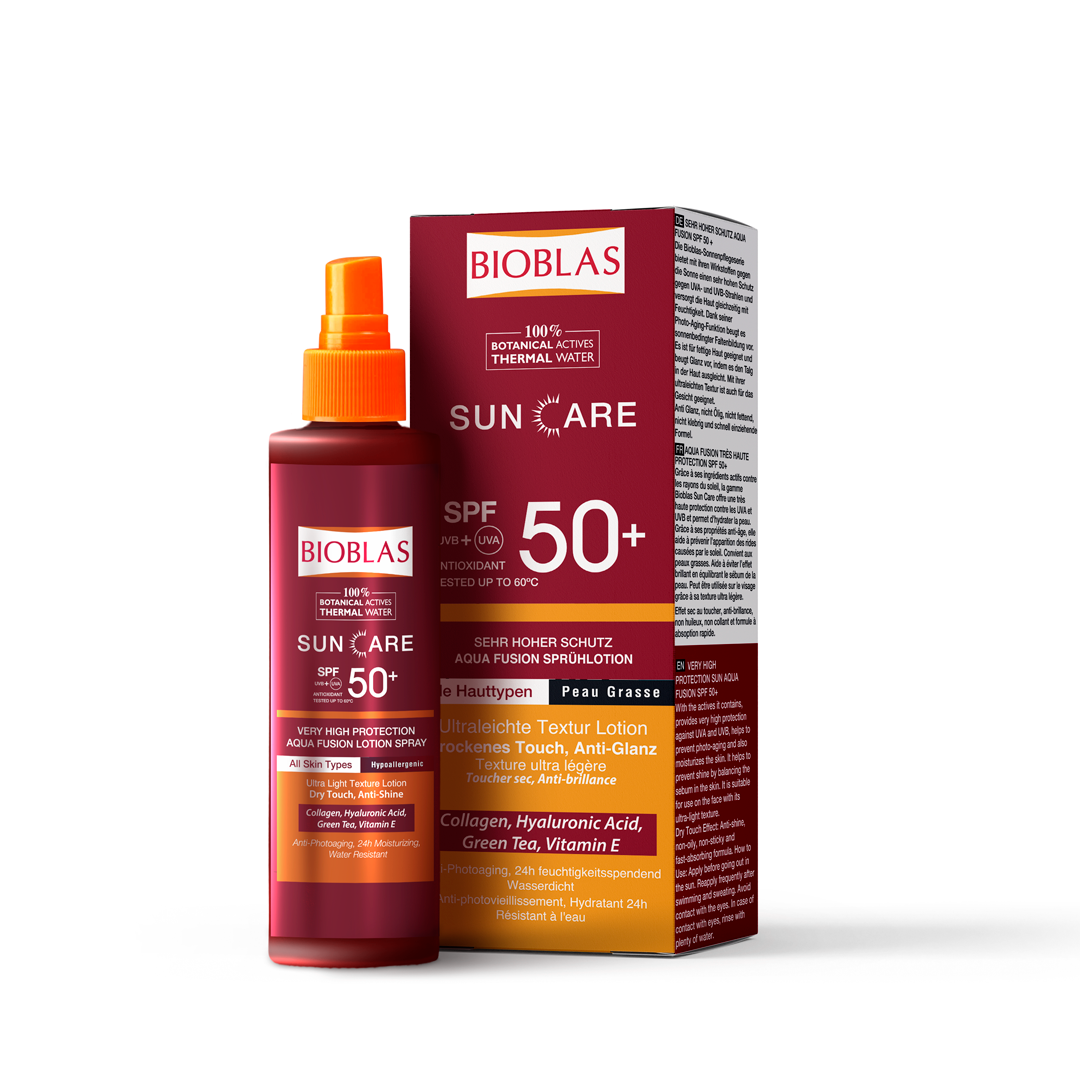
Skincare Collection
Discover our refreshing skincare range designed to hydrate, protect, and nourish your skin. Perfect for all skin types looking for a radiant and healthy complexion.
Shop NowFrequently Asked Questions
Is hair transplantation affecting the natural appearance of hair?
Modern hair transplantation techniques like FUE and DHI deliver very natural results when done properly, allowing hair density and pattern to match the original hair.
Should I stop some medications if they cause hair loss?
This should be discussed with a specialist doctor, as in some cases the dosage can be adjusted or the medication replaced by another treatment with less impact on hair.
How long does it take to see results of hair loss treatment?
Initial results from medication treatments usually appear after 3 to 6 months of regular use; treatments like plasma injections or hair transplantation may take longer to achieve final results.
Is hair loss a problem treated only in men?
No, hair loss is also a common issue among women and requires tailored treatment that considers hormonal and biological differences between genders.


