


Minoxidil and side effects are key considerations for anyone exploring hair regrowth therapy. Though minoxidil is effective for many, the side effects of minoxidil vary from mild scalp reactions to broader adverse effects of minoxidil in certain cases. Oral minoxidil side effects add another layer of evaluation. For this reason, some individuals integrate hair growth supplements, a biotin supplement, or a dht blocker supplement into their regimen for balanced support.
What Is Minoxidil?
Minoxidil is a pharmacological agent widely used to manage thinning hair and hereditary hair loss. Understanding minoxidil and side effects requires recognizing that the compound stimulates follicular activity rather than addressing hormonal causes directly. Applied topically, it enhances the growth cycle of existing follicles; taken orally, it may produce oral minoxidil side effects that require monitoring.
How Does It Work for Hair Loss?
- Hair follicles go through natural cycles, and minoxidil interacts directly with those cycles. When people search for minoxidil and side effects, they often forget that the same mechanism that promotes growth can also explain temporary reactions.
- Minoxidil acts as a vasodilator, increasing micro-circulation around follicles.
- Improved blood supply may help dormant follicles re-enter the growth phase.
- Over time, thin “miniaturized” hairs, which are smaller and weaker than normal hairs, may grow thicker.
- It does not interfere with hormones, which is why it differs from a dht blocker supplement.
- Because hormonal causes remain active, some users add hair growth supplements for internal support.
- Biotin vitamin tablets are often included to assist keratin production.
- Early shedding can occur as part of follicle reset.
- Oral minoxidil side effects are more systemic because the compound enters circulation.
- Consistency is essential; stopping interrupts stimulation.
DHT Blocker vs Minoxidil
| Minoxidil | DHT Blocker |
|---|---|
| People often assume these two options do the same thing, but they really don’t. The difference becomes clearer once you understand what each one is actually targeting. | People often assume these two options do the same thing, but they really don’t. The difference becomes clearer once you understand what each one is actually targeting. |
| Minoxidil works on the surface level of the follicle. It increases blood flow in the scalp. Better circulation can help weak follicles stay active longer. It encourages growth, but it doesn’t directly affect hormones. | A DHT blocker supplement works in a different direction. It focuses on reducing the impact of DHT, which is often the root cause of pattern hair thinning. |
| Minoxidil pushes follicles to perform better while you’re actively using it. | If hair loss is mainly hormonal, blocking DHT may help slow the progression. |
| Some users notice mild side effects at the beginning, such as dryness or scalp irritation. | Side effects vary depending on the ingredients used in the supplement. |
| In tablet form, oral minoxidil may affect the body beyond the scalp and requires medical supervision. | DHT blockers work internally and are typically chosen when hormonal influence is the primary concern. |

Bioblas Hair Care Collection
Discover the Bioblas collection enriched with argan oil, designed to strengthen hair, reduce hair loss, deeply nourish the scalp, and enhance shine and softness.
Shop NowWhat Are the Minoxidil Side Effects?
- Before starting treatment, it’s important to look honestly at minoxidil and side effects without exaggeration or fear. Most reactions are mild, but awareness matters.
- The most common minoxidil side effects are related to the scalp.
- Users may notice itching, dryness, redness, or mild flaking.
- Some experience temporary shedding during the first weeks.
- This shedding phase often happens because weaker hairs are being replaced.
- In certain cases, unwanted facial hair growth may occur due to accidental spread.
- The side effects of minoxidil usually improve once the scalp adjusts.
- More serious adverse effects of minoxidil are uncommon but possible.
- With oral use, oral minoxidil side effects may include fluid retention or changes in heart rate.
- These systemic reactions are why oral forms require medical supervision.
- Individuals with cardiovascular conditions should be especially cautious.
- Combining treatment with supportive care, such as a balanced hair supplement routine, may help maintain overall scalp health.
Effective DHT Blocker Supplements for Thinning Hair
Minoxidil Side Effects in Men
- Men often approach treatment expecting fast, visible change. But any realistic conversation about minoxidil and side effects should include how the male body may respond differently.
- Mild scalp dryness is one of the first things some men notice.
- A slight burning or tingling feeling can appear during the first couple of weeks.
- Temporary shedding may happen early on, which can feel concerning at first.
- Redness around the hairline is possible, especially with liquid formulas.
- Applying more than recommended does not improve results and may increase irritation.
- Some men report increased facial or body hair if the solution spreads beyond the scalp.
- In oral use, dizziness or mild swelling has been reported in sensitive individuals.
- Changes in heart rate are rare but should be taken seriously.
- Those with blood pressure concerns should consult a physician before tablets.
- Most reactions improve once the scalp adapts to consistent use.
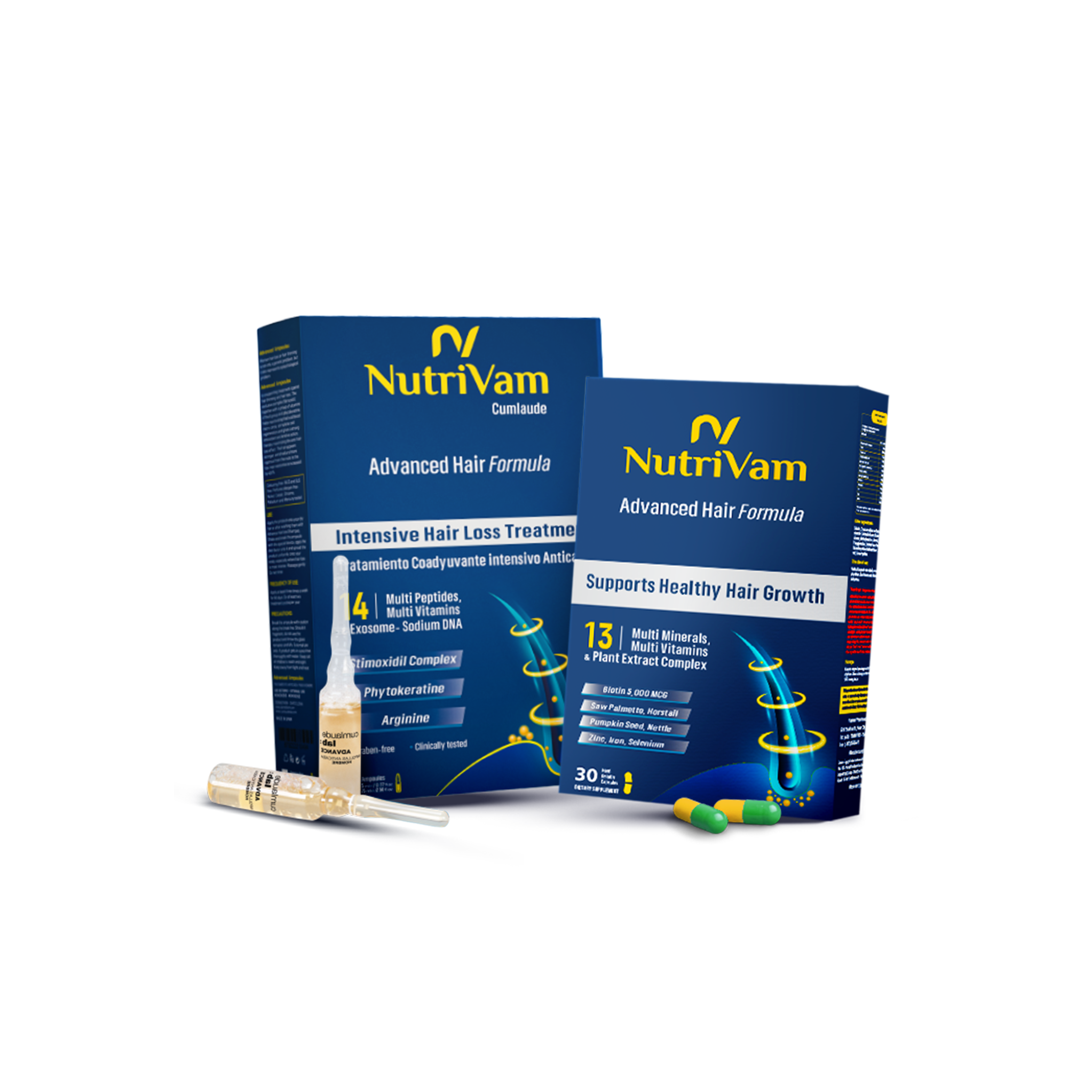
Nutrivam Hair Care Collection
Discover Nutrivam’s advanced hair care products designed to nourish your scalp, strengthen hair, reduce hair loss, and restore natural shine and vitality.
Shop NowMinoxidil Side Effects in Women
- Women often respond differently to treatment, especially because hormonal balance and scalp sensitivity vary across life stages. Any practical look at minoxidil and side effects in women should consider those differences.
- The most common reaction is mild scalp irritation, especially in the beginning.
- Some women report dryness or flaking if the scalp is already sensitive.
- Temporary shedding can happen during the first weeks and may feel stressful.
- Liquid formulations sometimes cause redness along the hairline.
- Women with color-treated or chemically processed hair may experience more sensitivity.
- Unwanted facial hair growth can occur if the product spreads beyond the scalp.
- Hormonal fluctuations, such as postpartum changes, may influence response.
- In oral use, swelling or lightheadedness should be taken seriously.
- Women with blood pressure concerns should consult a doctor before systemic use.
- Adjusting application frequency often improves comfort without stopping treatment.
Best Anti Hair Fall Products for Hair Shedding
Long-Term Side Effects
Long-term management is less about dramatic side effects and more about sustainability. A grounded perspective on minoxidil and side effects recognizes that ongoing use changes the conversation.
- Most people tolerate topical application well over time. However, chronic mild irritation can appear if scalp care is neglected.
- Results typically remain dependent on continued use.
- Abrupt discontinuation after extended periods may lead to noticeable shedding.
- Emotional reliance on visible density can affect confidence if treatment stops.
- Systemic versions require greater caution for prolonged use.
- Regular medical supervision is recommended for oral dosing.
- Individual response may shift with age or health changes.
- Adjusting routine instead of increasing concentration is often wiser.
- Sustainable use depends on moderation, monitoring, and realistic expectations.
Effective Hairline Growth Serum for Stronger Healthier Hair
What Happens When You Stop Minoxidil?
- Most people focus on starting treatment, not stopping it. But in any realistic conversation about minoxidil and side effects, the stopping phase matters just as much.
- Hair that improved during use is being supported by continuous stimulation. When that stimulation ends, the follicles slowly return to their original behavior.
- This change doesn’t happen immediately. It usually unfolds over several weeks or months.
- Many people notice gradual thinning rather than sudden bald spots.
- A temporary increase in shedding can happen while the growth cycle resets.
- This shedding may feel dramatic, but it reflects biology, not damage.
- The medication does not permanently alter genetic sensitivity to hormones.
- Any scalp dryness or irritation linked to application often settles after discontinuation.
- With oral use, physical reactions typically fade once the compound clears from circulation.
- Emotionally, the adjustment can feel more intense than the physical shift.
- Understanding that results were maintenance-based—not permanent restructuring—makes the transition easier to process.
Best Hair Oiling for Hair Growth and Strong Roots
What Is the Best Alternative to Minoxidil?
Not everyone feels comfortable committing to long-term medication. When thinking about minoxidil and side effects, many people start asking what other realistic options exist.
- One alternative approach focuses on reducing hormonal triggers rather than stimulating growth directly.
- A dht blocker supplement is often considered when thinning is clearly hormone-driven.
- Instead of pushing follicles to work harder, it aims to limit the influence of DHT over time.
- Some individuals prefer nutritional support rather than pharmacological stimulation.
A well-formulated hair supplement can support scalp health from within. - Hair growth supplements often combine vitamins, minerals, and botanical extracts.
- A biotin supplement may help strengthen the keratin structure of the hair shaft.
- Biotin vitamin tablets are commonly chosen when breakage and fragility are part of the issue.
- Lifestyle factors such as stress, diet, and sleep also play a role in overall density.
- For some people, combining internal support with scalp care feels more sustainable than daily topical medication.
- The best alternative depends on whether the goal is hormonal balance, structural strength, or overall scalp health.
Hair Vitamins Benefits Side Effects and How to Choose٠
Conclusion
By the time someone looks into minoxidil and side effects, they’re usually just trying to protect what they still have. Hair loss decisions aren’t only medical—they're emotional too. What matters most is knowing what you’re committing to and whether it feels sustainable for you. Some people stay with treatment long-term; others shift toward supportive options. There isn’t one “correct” path. If you need structured, easy-to-understand guidance while considering your options, vamerpharma is there to support your decision with practical information and carefully selected solutions.

Hair Care Products
Hair Care Collection at Vamer Pharma offers advanced shampoos, oils, and treatments to strengthen hair, reduce hair loss, nourish the scalp, and boost shine.
Shop NowFAQs
How long before I see any change?
Most people don’t notice anything in the first few weeks. Around the third or fourth month, some begin to see small improvements. Results are usually gradual rather than dramatic.
Is early shedding normal?
Yes, it can happen. Although it may feel worrying, for many users it is part of the adjustment phase rather than a negative reaction.
Can I use more to get faster results?
Using more than the recommended amount does not speed up results. It may only increase the risk of scalp irritation.
Is the oral version different?
Yes. Because it works through the bloodstream, it requires medical supervision and is not suitable for everyone.
Is it something I need to use forever?
If you want to maintain the results, ongoing use is usually required. Once stopped, the added support gradually fades over time.


