


Hair vitamins are often the first thing people search for when they notice increased shedding or slower growth. Many vitamins for hair growth contain biotin, iron, and antioxidant support that help maintain normal follicle function. When nutrition is unbalanced, hair may lose strength and density. Well-formulated hair vitamins for hair growth can support overall scalp health alongside a proper diet.
What Are Hair Vitamins?
Hair vitamins are dietary supplements specifically formulated to support hair health rather than general wellness. They usually combine nutrients linked to hair growth and strength, such as biotin, vitamins A, C, D, E, B‑complex, iron, zinc, collagen, folic acid, and sometimes omega‑3 fatty acids or plant extracts.
These products are marketed to help improve hair growth, thickness, shine, and reduce breakage or shedding, especially when there is an underlying nutrient deficiency affecting the hair. However, evidence shows they work best as a complement to a balanced diet and medical care, not as a stand‑alone cure for conditions like genetic baldness or severe hair loss.
How Do Hair Vitamins Work?
- Hair vitamins provide micronutrients that support normal follicular metabolism. They do not stimulate hair artificially; instead, they contribute to the internal conditions required for structured growth and cellular maintenance.
- Many vitamins for hair growth address common nutritional gaps. Reduced iron availability, for example, may affect oxygen delivery to rapidly dividing follicular cells. Insufficient micronutrient intake can also influence protein synthesis efficiency within the hair matrix.
- Biotin for hair functions as a cofactor in enzymatic reactions linked to amino acid and fatty acid metabolism. Because keratin is protein-based, metabolic balance influences strand formation, though only within physiological limits.
- Well-formulated hair vitamins for hair growth combine minerals, vitamins, and antioxidants to support multiple biological pathways simultaneously, including circulation, energy production, and redox stability.
- In practical terms, hairvitamins and structured hair vit supplementation help maintain normal follicle performance when dietary intake does not fully meet metabolic demand. They stabilize function rather than override genetic regulation.
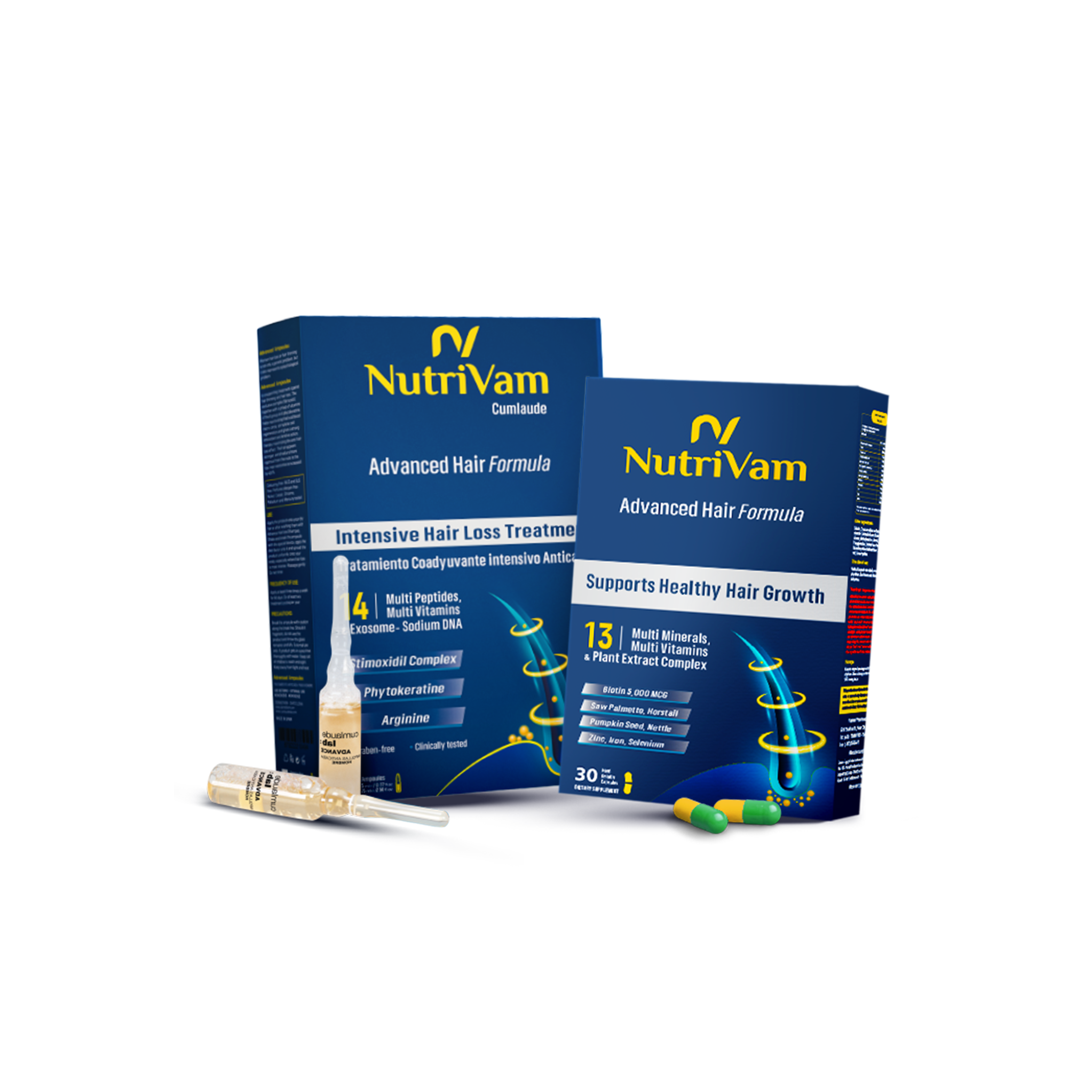
Nutrivam Hair Care Collection
Discover Nutrivam’s advanced hair care products designed to nourish your scalp, strengthen hair, reduce hair loss, and restore natural shine and vitality.
Shop NowKey Vitamins and Minerals for Hair Growth and Thickness :-
| Nutrient / Section | Explanation |
|---|---|
| Overview | When people talk about hair vitamins, they often expect one miracle ingredient. In reality, hair health depends on several nutrients working together, not a single compound doing all the work. |
| Biotin | Biotin is commonly found in vitamins for hair growth because it supports normal protein processing. Since hair is mostly keratin, proper protein metabolism matters more than marketing slogans. |
| Iron | Iron plays a quiet but important role. If iron levels drop, oxygen delivery to active follicle cells may decrease, and that can affect how efficiently hair grows. |
| Zinc | Zinc is involved in cell turnover and tissue repair. These processes influence scalp balance and the stability of growing strands. |
| Selenium or Vitamin E | Many hair vitamins for hair growth also include selenium or vitamin E. These nutrients help maintain oxidative balance, especially under stress or environmental exposure. |
Biotin for Hair Benefits :-
- When people buy hair vitamins, biotin is usually the first ingredient they look for. Not because it’s magical, but because it’s connected to how the body handles protein. Since hair is built from keratin, that connection makes sense.
- A person's hair may feel weaker or break more easily if their biotin levels are truly low. Correcting the level in that case could eventually increase the strength of the entire strand.
- What biotin does not do is suddenly speed up growth beyond what your body is programmed to do. It supports normal function. That’s it.
- Most formulas include reasonable amounts because extremely high doses don’t automatically mean better results.
- Like all hair vitamins, the benefit depends on whether your body truly needs the support.
Best Hair Vitamins for Hair Growth :-
- Choosing the right hair vitamins is less about trends and more about understanding what your body might actually be missing. There isn’t one universal formula that works for everyone.
- Biotin is widely used because it supports normal protein metabolism. Since hair strands are built from keratin, it makes sense that adequate protein processing matters for strength and structure.
- Iron becomes especially important when low levels are linked to increased shedding. In those cases, correcting the imbalance can have a noticeable impact over time.
- Selenium and vitamin E are often included to support overall cellular stability, particularly under oxidative stress.
- Resveratrol is sometimes added in newer formulas, mainly for its antioxidant properties rather than direct growth stimulation.
Hair Vitamins vs Multivitamins vs Diet:-
| Aspect | Hair Vitamins | Multivitamins | Diet (Food) |
|---|---|---|---|
| Main purpose | Designed with one clear goal: support hair health | Designed to support overall health | Provides broad nutrition for the whole body |
| Ingredient focus | Target nutrients linked to hair structure and growth | Balanced mix to cover general daily needs | Wide variety of vitamins, minerals, proteins, fats, and carbs from natural sources |
| Balance of nutrients | Formulated around hair-related nutrients, not full-body balance | Formulated for overall balance, not specifically hair-focused | Naturally balanced if meals are varied and well planned |
| Real-life limitations | Helpful when diet is lacking in specific hair-related nutrients | Helpful when diet is irregular, with missed or unbalanced meals | Can be weakened by stress, skipped meals, or restrictive diets |
| Impact on hair | More direct impact on hair if the right deficiency exists | Indirect impact; supports general health which may reflect on hair | Strong impact if diet is rich in hair-friendly nutrients (protein, iron, B vitamins, etc.) |
| When useful | When there is a clear need or confirmed deficiency affecting hair | When you want to cover general nutritional gaps | Always the foundation; should be optimized before relying on supplements |
| Limitations | Not automatically necessary; can be overused because of trends | May miss key hair-specific nutrients or contain them in low amounts | Harder to keep perfect every day due to lifestyle and habits |
| Priority order | Consider after diet and overall health have been reviewed | Consider alongside diet to support general wellness | Should be the first focus before adding any hair-specific or general supplements |
Do Hair Vitamins Really Help Hair Growth?
- Hair vitamins may help, but the answer depends on context. If there is a measurable deficiency, correction can improve follicle performance. Without deficiency, the impact is often limited.
- The body regulates hair growth through cyclical phases. Vitamins for hair growth do not bypass this cycle. They influence internal conditions that allow follicles to function normally rather than forcing acceleration.
- When iron levels are low, oxygen delivery to active follicular cells declines. When protein metabolism is compromised, keratin assembly may weaken. Nutrients like hair biotin can help maintain metabolic balance in these situations.
- Well-designed hair vitamins for promoting hair growth focus on stability, not stimulation. They support circulation, energy production, and cellular turnover simultaneously.
- Hairvitamins and structured hair vit use are supportive tools. They restore internal balance where needed; they do not create new biological capacity.
How to Choose the Right Hair Vitamin Supplement?
- When choosing hair vitamins, start by asking why you need them in the first place. Are you noticing shedding, thinning, or slower growth? The reason matters more than the brand name.
- Check the ingredient list carefully. A shorter, balanced formula is often better than one overloaded with excessive doses that sound impressive but may not be necessary.
- Look at the dosage. More is not always better. Extremely high concentrations do not guarantee faster results and may not suit everyone.
- Consider your diet and lifestyle. If you already eat well and have no known deficiencies, expectations should stay realistic.
- Pay attention to quality standards. Reliable manufacturing, clear labeling, and transparency about sourcing make a difference.
- Finally, think long term. Hair vitamins work gradually, so consistency and patience are more important than switching products every few weeks.
Side Effects and Dangers of Overusing Hair Vitamins :-
- With hair vitamins, it’s easy to assume that if a normal dose helps, a higher one might help more. That’s usually not how the body works. Nutrients follow balance, not force.
- Some vitamins are stored in the body rather than flushed out quickly. Taking large amounts for long periods can create imbalances you didn’t expect.
- Minerals can compete with each other. Too much of one may reduce how well another is absorbed, which defeats the purpose of supplementing in the first place.
- Stomach discomfort is also common when doses are high or taken without food. It’s not dramatic, but it’s a sign the body isn’t fully comfortable with what it’s getting.
- Hair doesn’t grow faster just because intake increases. Growth follows its cycle.
- The safest way to use hair vitamins is to simply stick to recommended amounts and avoid combining multiple similar products without checking total intake.
Conclusion
In reality, hair vitamins typically do not provide a comprehensive solution. Sometimes they help, especially if your body is running low on something important. Other times, the issue has more to do with stress, diet, or simple genetics. Therefore, it is advisable to consider the broader picture rather than focusing on immediate outcomes. If you’re unsure what direction to take, reading practical breakdowns on vamerpharma can help you understand your options before buying anything.

Bioblas Hair Care Collection
Discover the Bioblas collection enriched with argan oil, designed to strengthen hair, reduce hair loss, deeply nourish the scalp, and enhance shine and softness.
Shop NowFAQs
Do hair vitamins really work?
Yes, but it depends on why your hair is struggling in the first place. If there’s a nutritional gap, they can help. If not, the difference may be minimal.
Will I see results quickly?
Hair takes time. Most changes, if they happen, show up after a couple of months.
Can they stop shedding completely?
No supplement can promise that. They may reduce shedding if it’s linked to deficiency, but they won’t control stress or hormones.
Do they make hair thicker?
They might improve strength, which can make hair feel fuller, but they don’t change natural density overnight.
Are side effects common?
The side effects are typically mild, if they occur at all. Stomach discomfort is the most reported issue.
Can men use them too?
Yes, hair structure is similar in both men and women.


